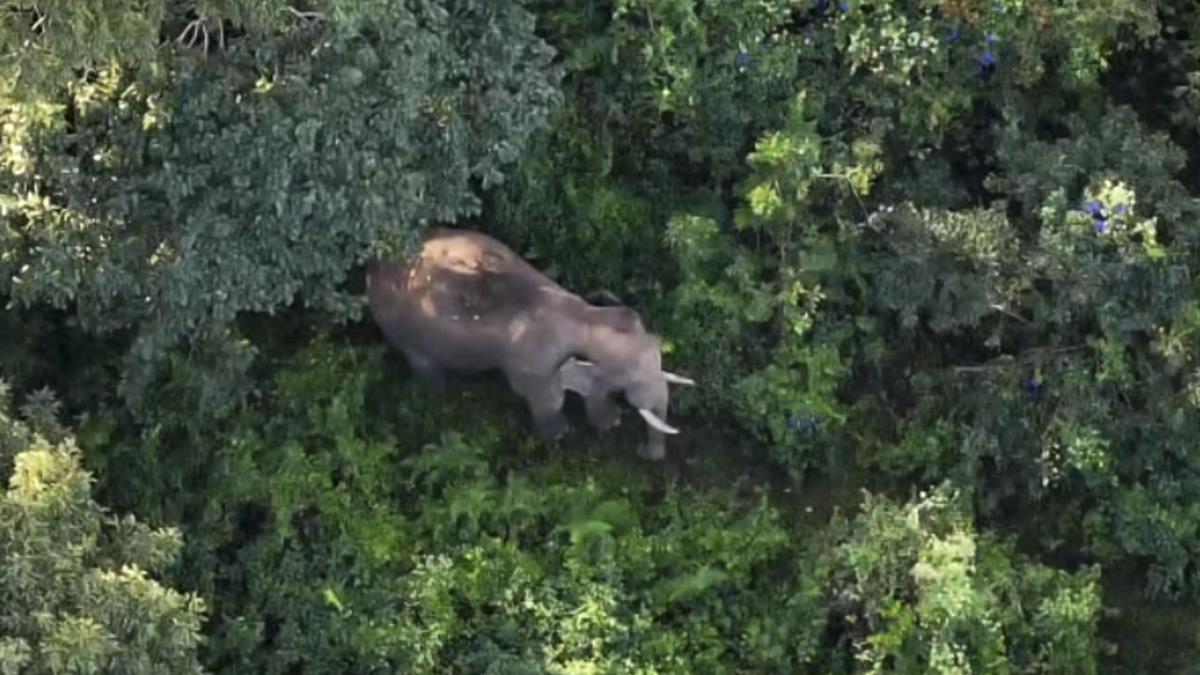
The Kerala High Court has adjourned a public interest litigation seeking a stay on Mission Chakkakomban, the capture of a wild elephant in the Chinnakanal-Santhanpara area, after a Division Bench of Justices Anil K. Narendran and V.M. Syam Kumar expressed doubts over whether the plea was maintainable. The court noted there was insufficient material to show that the petitioner, Saviours Environment and Animals Charitable Society, was authorised to file the PIL under the High Court of Kerala Rules, 1971.
The plea had sought directions for a full report on the operation, including the drugs and doses used, injuries, the elephant's health and veterinary follow-up. The petitioners also sought the appointment of a monitoring committee to stop radio collaring and instead use artificial intelligence or CCTV surveillance, restore blocked corridors, remove illegal solar electric fences and put in place an El Nino contingency plan, among other things.
The development comes after another Division Bench recently dismissed a separate PIL seeking a stay on the operation, observing that the petitioner was only trying to achieve his few moments of glory in the press. That Bench of Justices A.K. Jayasankaran Nambiar and V.M. Syam Kumar noted that the petitioner, Prince Chacko of Kottayam, had produced a communication from the Chief Wildlife Warden stating that the operation was for radio-collaring and tracking the elephant, and that the administration's sole intention was to carry it out. Steps were being taken to clear hurdles in the traditional elephant corridor and make life safer for elephants and people in the Chinnakanal area, the court was told, and it held that this response substantially cleared the petitioner's apprehensions.
That plea had also sought a scientific study on the Anathara, elephant food areas, habitat loss, encroachment, fencing of elephant corridors and human disturbance in the Anayirankal catchment, 301 Colony, Chinnakanal and adjoining areas, along with directions for non-invasive monitoring, early warning systems, tourist regulation, public awareness programmes and scientifically appropriate measures to prevent human-elephant conflict. The court, however, found that the petitioner had not proved he was acting in the public interest, noting that although he claimed to be the secretary of an animal welfare organisation, he had stated he was filing the PIL in his personal capacity, and it expressed doubts about his genuineness upon reading his contentions.