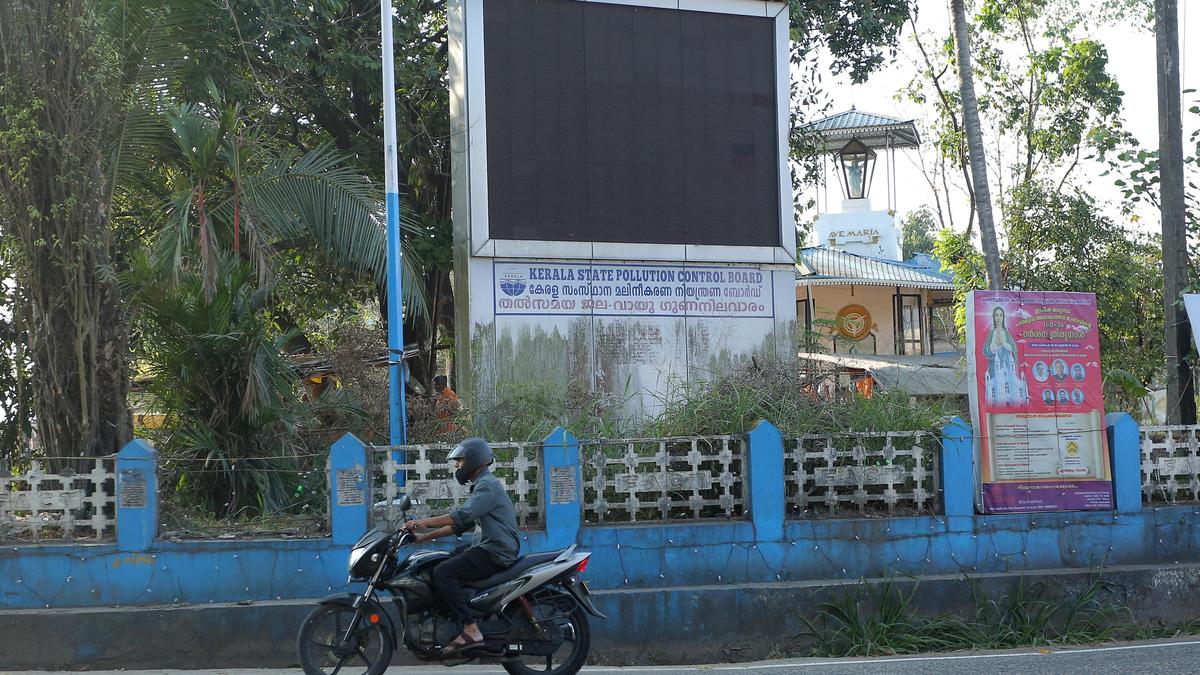
The Kerala government has appointed an expert committee to assess the state's air quality and recommend mitigation measures, following discrepancies in Air Quality Index readings for Kochi and Thiruvananthapuram that have raised public concern.
The committee comprises Suresh Ramasubramanya Iyer, Senior Fellow and Area Convenor at the Centre for Air Quality Research, The Energy and Resources Institute (TERI), New Delhi; Dr. George K. Varghese, professor in the Department of Civil Engineering at NIT Calicut; and the Chairperson of the Kerala State Pollution Control Board (KSPCB). It has been asked to identify the reasons for the mismatch in AQI figures reported by different sources, including the Central Pollution Control Board, the KSPCB, other official monitoring stations, satellite-based systems and private or low-cost sensors, and to recommend a single authoritative reference for the KSPCB.
KSPCB Chairperson S. Sreekala said that readings from the board's sensors, installed as per Central Pollution Control Board specifications, did not show any alarming trends, with air quality mostly in the good, satisfactory or moderate categories. She said unhealthy categories such as poor, very poor and severe had not been recorded in the state, while readings from some other agencies have frequently placed air quality in the poor category.
The committee will analyse AQI and key pollutant trends, including PM2.5, PM10, NO2, SO2 and O3, in Kochi and Thiruvananthapuram over the past few years, covering seasonal and location-wise variations and major pollution sources such as vehicular emissions, construction and road dust, waste burning, industrial activity, and port- and airport-related operations. Experts note that Kerala's annual rainfall of around 3,000 mm and a rainy season extending over nearly six months help keep pollution levels in check, and that sensor location could result in misleading readings. The committee is expected to submit its report to the state government within two weeks.