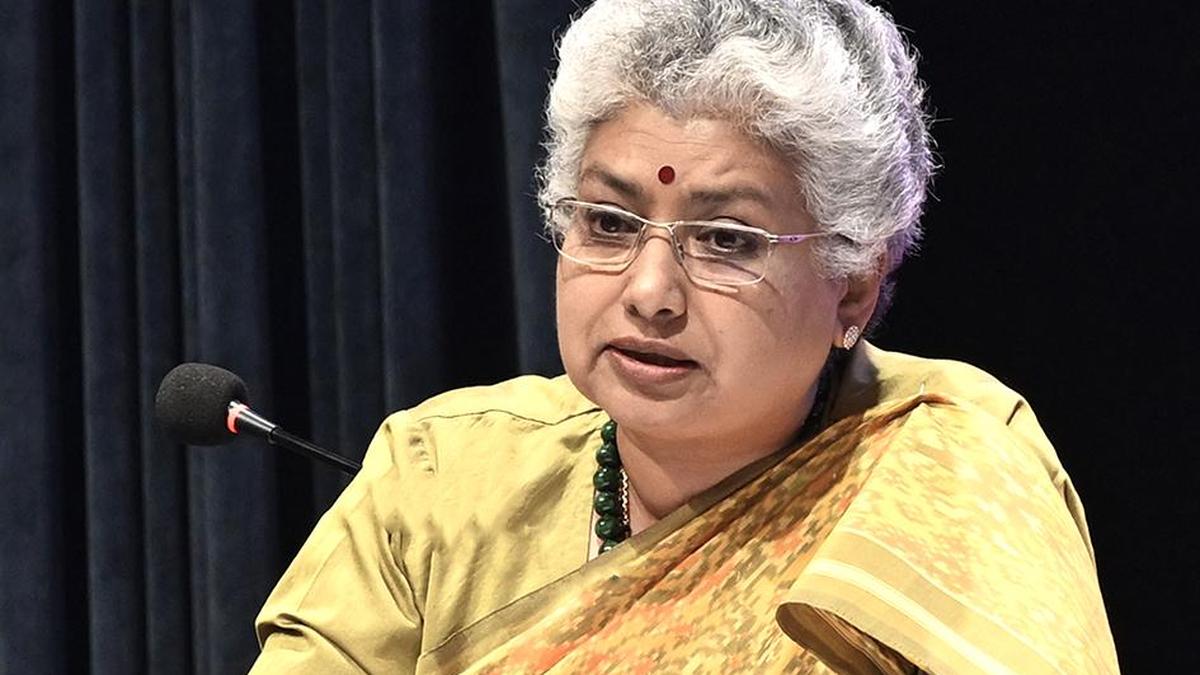
Justice B.V. Nagarathna, one of the senior-most judges of the Supreme Court and in line to be the first woman Chief Justice of India, has said that the presence of women in high public office does not by itself establish that equality has been achieved throughout society. She made the remarks at the inaugural Cornelia Sorabji Memorial Lecture at Somerville College, University of Oxford, on Wednesday.
According to Justice Nagarathna, a woman may hold a senior position while other women remain excluded from education, employment, property or effective legal remedies. She said only the practice of substantive equality could address the differences among women from diverse life experiences. A judgment alone, she said, cannot guarantee safe workplaces, education for every girl, lawful inheritance for every woman or timely protection for every victim of domestic violence, and legislation cannot fulfil its purpose if remedies are inaccessible or social attitudes prevent women from asserting their rights.
The judge cited Constitutional amendments reserving one-third of seats for women in Parliament and State legislatures as evidence that women should participate in decision-making rather than be content with a formal right to vote. She noted that where historical exclusion has shaped institutions, formal equality alone may not secure meaningful representation. Justice Nagarathna also said the progress of Indian women's rights cannot be measured by the number of discriminatory provisions struck down or beneficial laws enacted, and that recognition of violence against women as a violation of constitutional rights has not translated into women seeking legal protection without fear of stigma, retaliation or economic insecurity.
On equality, she flagged the disproportionate burden of unpaid domestic and care work borne by women, which she said continues to determine their choices. She said there is no single experience of being a woman, as caste, class, disability, religion, region and economic circumstances can profoundly alter the obstacles a woman encounters, and that formal uniformity cannot by itself remedy intersecting structural disadvantage.