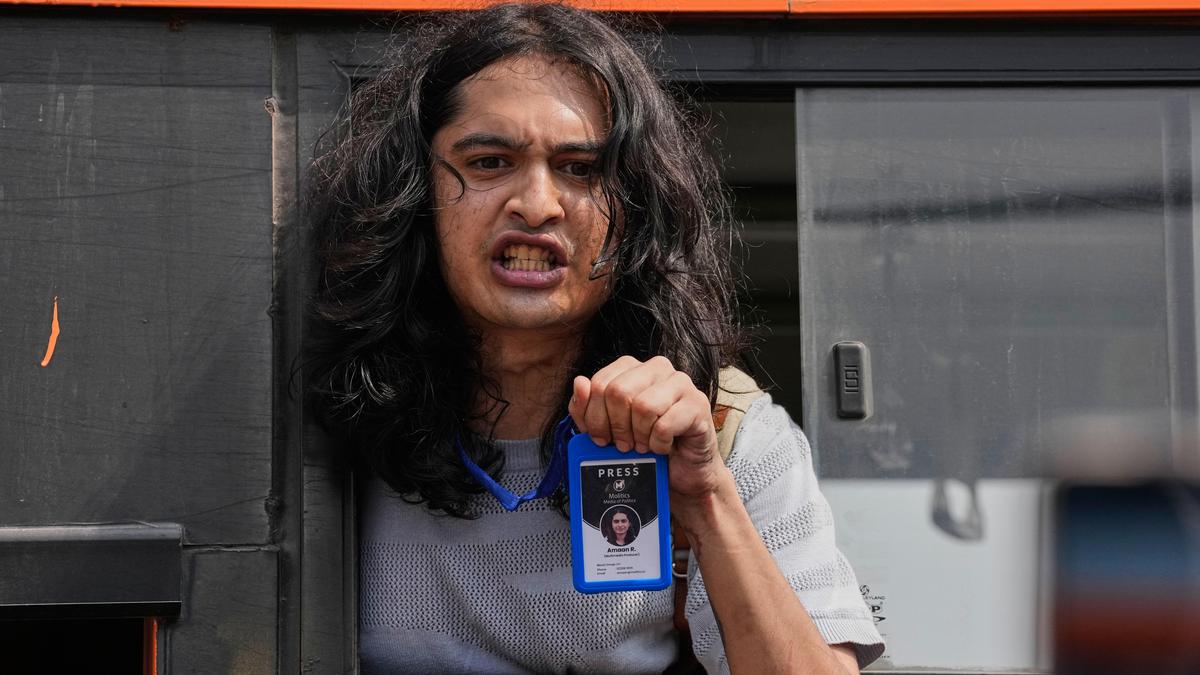
Independent journalists who covered the protests against Chief Election Commissioner Gyanesh Kumar in Delhi have rejected the Delhi Police's position before the Supreme Court that social media content creators and reel-makers cannot be equated with bona fide journalists and are not entitled to protections given to accredited mediapersons. In its affidavit, the Delhi Police Commissioner defended the force's actions during the October protests, claiming that the presence of YouTube reel-makers and social media influencers at protest sites made it "difficult" for personnel to distinguish journalists from protesters, and that this confusion had led to the inadvertent removal of journalists during crowd-control operations. The affidavit, which also maintained that police guidelines applied to mediapersons carrying proper identity cards, came in response to petitions alleging that journalists covering the protests against Mr. Kumar had been manhandled, harassed and detained.
The reporters present on the ground argue that the police's argument conflates the format in which news is presented with the nature of the work itself, and that journalism cannot be restricted to those employed by established media organisations or holding institutional credentials, particularly when more reporters are documenting events and reaching audiences through digital platforms. Bindu Gujjar, an independent journalist from Delhi who documents caste and gender-related issues, said independent journalism had emerged partly because of the gap between what was unfolding on the ground and what mainstream media organisations were reporting. She said independent reporters had played an important role in documenting protests and countering misleading narratives, and that the growing use of short-form video is a change in the medium, not a dilution of journalism.
Ms. Gujjar cautioned that dismissing independent journalists as "reel-makers" could have serious consequences for the profession. "Those who use terms such as 'reelbaaz' to insult and demotivate independent journalists will be responsible for the murder of journalism in this country," she said. Her Instagram account 'samachar_bybindu', which had over 30,000 followers, was suspended in July 2026, after which she was forced to start a fresh account.
Abhay Mandhare, 24, a Delhi-based independent journalist who reports in Marathi through his Instagram page 'Marathi Abhay', said growing dependence on YouTube and social media for news had made independent platforms more influential, particularly in shaping public opinion. He said the government has realised it can no longer control the narrative as it did with print and TV by cutting down ads or access, and is therefore trying to gatekeep social media platforms at a time when audiences were moving away from conventional media. He said his page, which had around 5,000 followers before July, had grown to 13,000 followers, with his videos reaching three to four million views a month after he began putting out more ground reports.