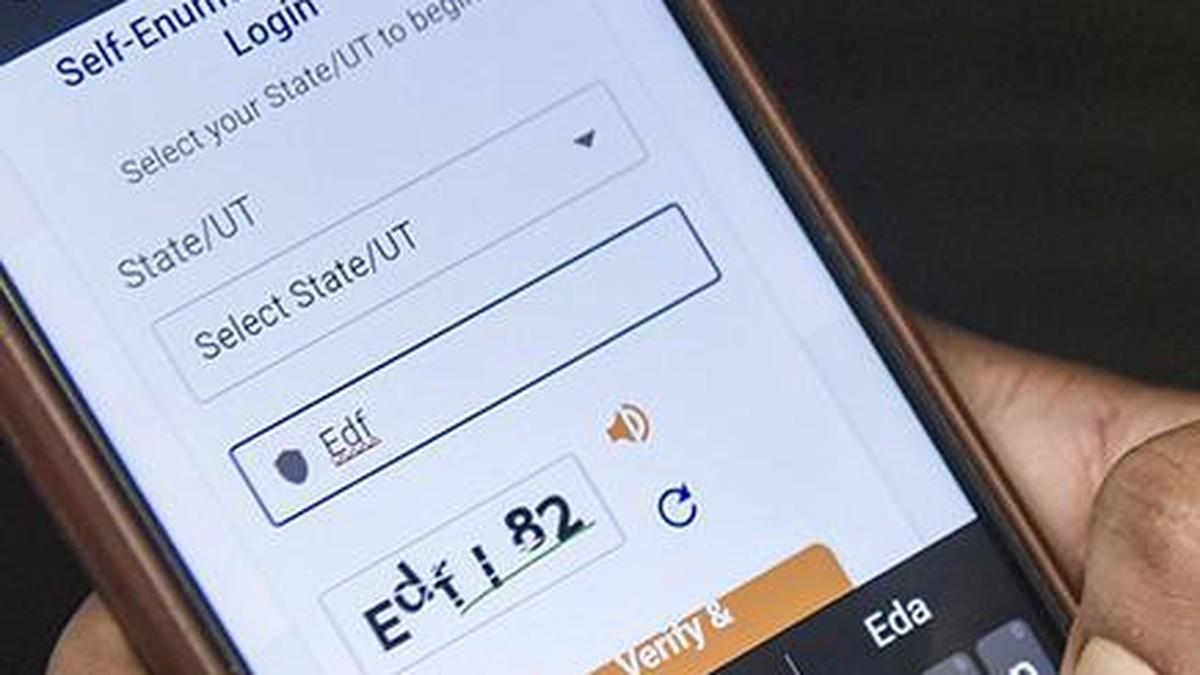
The self-enumeration portal for Census 2027 now lists 76 entries under "Other" religions, shown as predictive text suggestions rather than a drop-down menu. An examination of the revised list showed that over 200 entries previously displayed were removed after the portal went live on November 16, 2026 for four poll-bound States — Uttar Pradesh, Goa, Punjab and Uttarakhand.
The deleted entries included Satguru, Ramdev, ISKCON, Ramkrishna Paramhans, Gorak Nath, Sanatan, Bishnoi, Vaishnaw, Shia and Sunni, among others — names either classified in earlier Censuses as sects within the six major religions or not recorded in previous Censuses at all. The change came days after The Hindu reported that at least 287 such entries had appeared in a drop-down menu and were then removed. Officials had said the list was part of predictive text entries meant to reduce variations and spelling mistakes, but did not clarify how previously unrecorded entries had appeared.
Most of the 76 remaining suggestions correspond to faiths already recorded and tabulated from the 2011 Census, a majority being religions and faiths of Scheduled Tribe communities such as Sarna, Doni Polo, Tana Bhagat, Birsa, Garo, Munda, Oraon and Santal. Five entries — Adibasi dharma, Bura Deo, Karupa, Tingkao Rangong and Tingwang Hingde — do not feature in the 2011 or 2001 Census tables for "Other religions and persuasions".
After the earlier drop-down was reported and removed, Opposition leaders and OBC associations questioned the conduct of the 2027 Census, with many asking why a drop-down was introduced for religions but not for caste. Experts also questioned the inclusion of previously unrecorded entries, saying there would be nothing to compare them with. A section of general category communities in north India reacted to the 287 entries by alleging an attempt to "divide Hindus". The 2027 Census is the first time Independent India is enumerating caste.