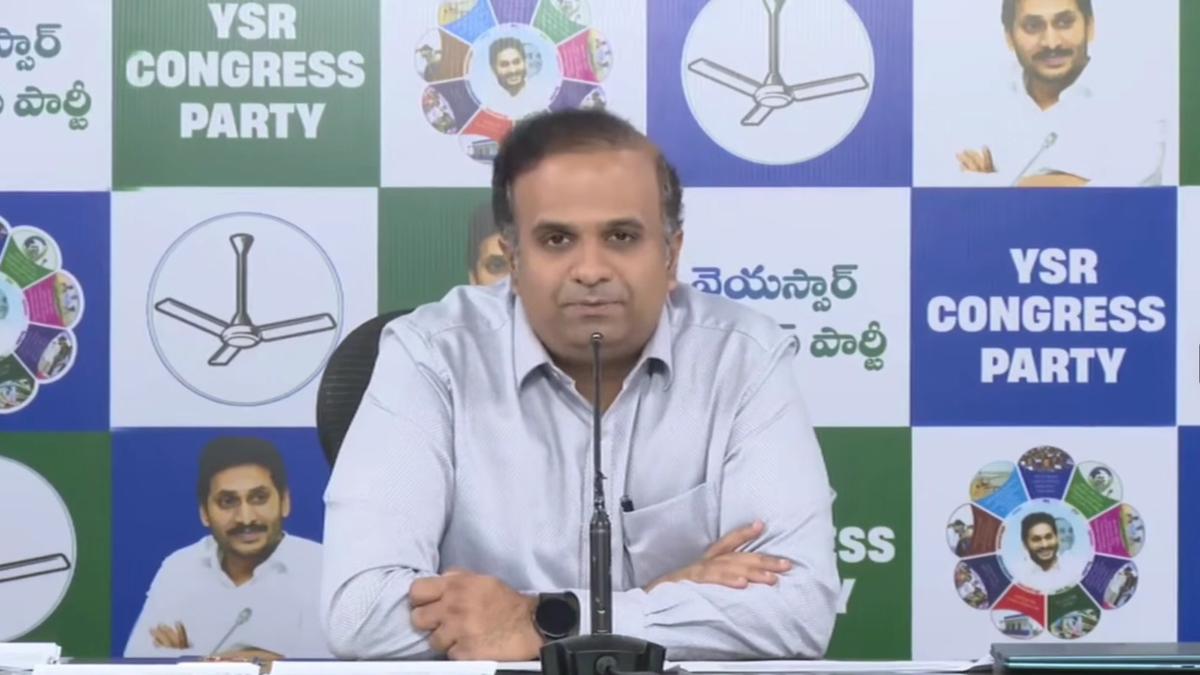
The YSR Congress Party (YSRCP) has accused the NDA coalition government of leaving more than ₹8,700 crore in fee reimbursement and hostel maintenance dues unpaid, and challenged Education Minister Nara Lokesh to reconcile his claims on payments with the figures in the government's budget documents. Addressing a press conference in Vijayawada on Friday (November 20, 2026), YSRCP Political Affairs Committee member Duvvuri Krishna alleged that the government was responsible for paying about ₹11,700 crore towards 12 quarters under the Vidya Deevena and Vasathi Deevena schemes, while its expenditure in 2024-25 and 2025-26 amounted to only about ₹3,000 crore, according to budget figures.
Mr. Krishna said the previous YSRCP government had spent ₹12,350 crore on fee reimbursement between 2019-20 and 2023-24 and another ₹4,850 crore on hostel and food expenses under Vasathi Deevena. It had also cleared ₹2,006 crore in fee reimbursement arrears left by the previous TDP government, he said. Rejecting Mr. Lokesh's allegation that the previous government had left ₹3,900 crore in dues, he said only ₹708 crore pertaining to the third quarter of 2023-24 remained unpaid because of the election code.
Questioning the Minister's claim that ₹1,665 crore had been released in 2025-26, Mr. Krishna said the revised budget estimates showed only ₹1,200 crore. He also pointed to discrepancies in the figures cited by the Minister and those presented in the budget for tribal welfare, minority welfare and Economically Weaker Section categories. He demanded a college-wise and quarter-wise statement of dues, budget release orders and actual payments, alleging that delayed reimbursements were allowing colleges to pressure students for fees. The reported suicide attempt by a student in Chittoor district should serve as a warning, he said.
On investments, Mr. Krishna questioned the government's claims that projects worth ₹7 lakh crore had been grounded and proposals worth ₹17 lakh crore converted. Government orders alone did not establish that investments had materialised, he said, seeking details of projects actually under construction or commercial production.