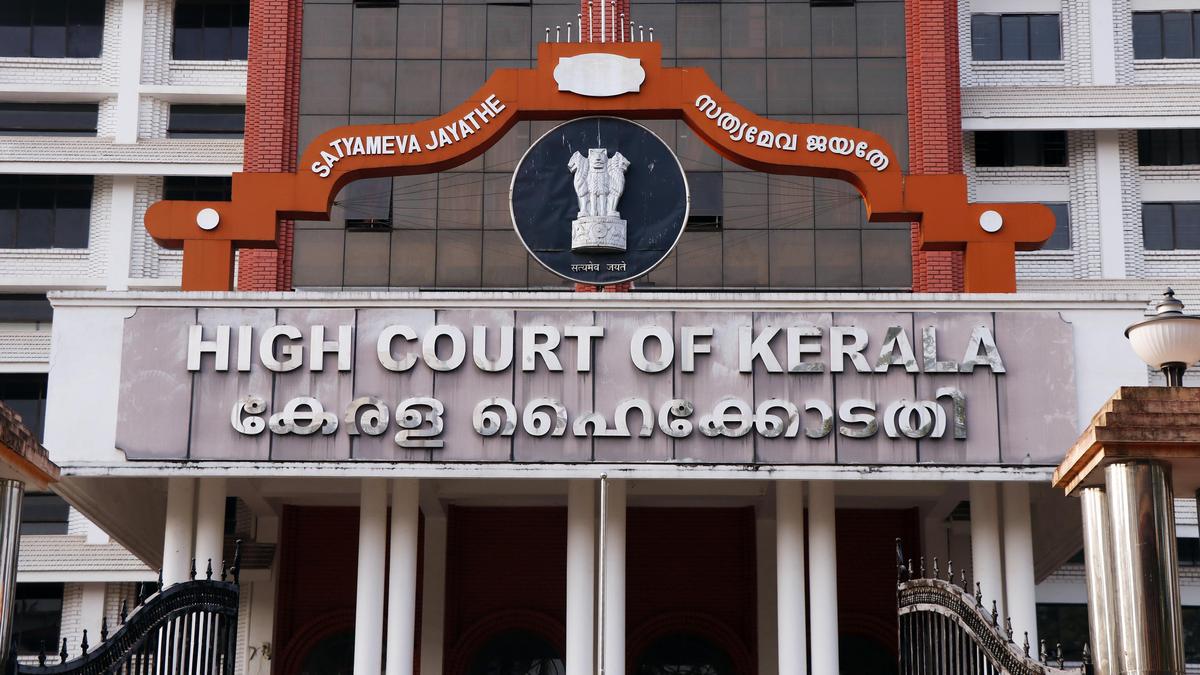
Vigilance and Anti-Corruption Bureau (VACB) Director Manoj Abraham has informed the Kerala High Court that the T1 and T2 sections of the bureau deal with sensitive information and inquiries that require protection. The clarification was provided in an affidavit on a public interest litigation (PIL) challenging a Government Order (GO) to exclude the T1 and T2 sections from the purview of the Right To Information (RTI) Act.
According to the affidavit, disclosing an intelligence input against a public servant would forewarn him, and he might conceal evidence to defeat the investigation. It might also expose informants to intimidation or retaliation, the affidavit stated.
Mr. Abraham explained that the T2 Section dealt with files relating to source reports, intelligence inputs, orders for surprise checks, confidential verifications and petitions, inquiries, and cases concerning sensitive matters specifically transferred. The T1 Section dealt with similar matters, along with annual confidential reports (ACRs) of the bureau staff and personal files of the executive staff. He said that after the order, functions related to the maintenance of ACRs of all ministerial, executive and legal staff, personal files of executive staff, and all legal staff of the VACB, among other such information, were reassigned to the establishment section of the bureau. In effect, this information was not excluded from the RTI Act, the affidavit said.
The affidavit claimed that the bureau's functions include conducting surprise checks to determine the truth in suspected cases of corruption, surveillance of officers with doubtful integrity, and maintaining dossiers on corrupt officers. It also included confidential communication to the government regarding corruption, malpractice, or misconduct by public servants, collecting intelligence on corrupt officials, and laying traps. The bureau stated that most of this intelligence was furnished by informants solely on the assurance of protecting their identity. Mr. Abraham also informed that the petitions received by the bureau were processed in the centralised processing system of the petitions section, and only petitions that needed confidential verification or a surprise check were transferred to the T1 or T2 sections. The bureau thus rejected the PIL's contention that the GO placed the State's anti-corruption administration beyond the purview of the Act.