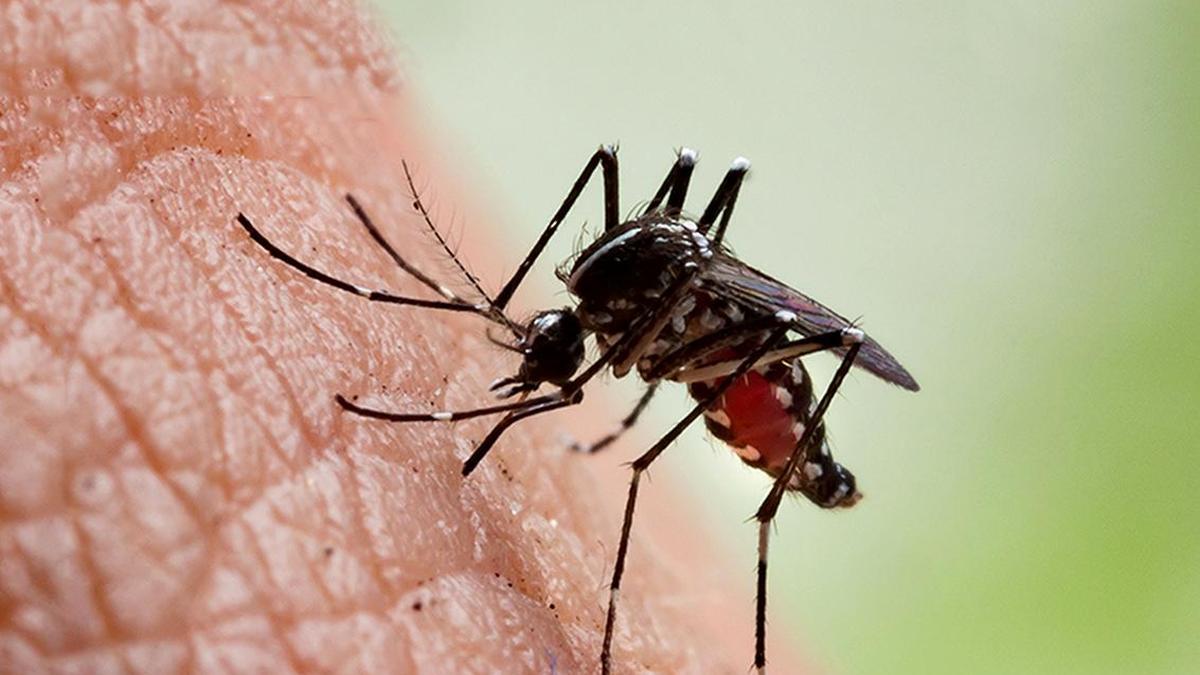
Thiruvananthapuram has seen a spike in dengue cases, with Kerala University's Karyavattom campus emerging as a hotspot where over 50 cases have been reported since November 9. Health department officials suspect this is a gross underestimation, as transmission is likely to have begun weeks earlier. Intermittent rain followed by hot and humid weather has driven the spike in the district, even as the general dengue trend has been on a slow decline across the State since July. In the last 10 days, the district has reported 200 probable and 97 confirmed dengue cases.
On Monday, following a meeting called by the Health department that was attended by the Vice Chancellor, some KU syndicate members and public health experts from the School of Public Health under Kerala University of Health Sciences, it was decided to shut the Karyavattom campus and hostel buildings for three days to carry out intense vector control measures and break the transmission chain. According to a senior Health official, district health officials and vector control teams who visited the campus and hostel found solid waste management to be a huge issue. Carelessly discarded plastic disposable food containers with stagnant rainwater, indoor plants in hostel rooms, broken manholes and blocked drains were cited as reasons for intense mosquito breeding inside the vast campus. The department has also decided to serve notice to the KU Registrar under the Kerala Public Health Act for allowing the campus to become a mosquito breeding ground and pose a public health issue.
Teams from the Pangappara health centre have been working on the campus since November 10, and the district vector control team and Corporation health staff will now join them. Fogging to kill adult mosquitoes and indoor space spraying in hostel rooms will be accompanied by a source reduction campaign, officials said. The district health administration has identified several dengue pockets within the city with abundant breeding sources and intense vector breeding. Officials point out that several large government properties with vast, ill-maintained grounds are also turning out to be hotspots. In the Cliff House compound, seven police personnel on guard duty were down with dengue, after which a district health team visited the location. In some bungalows where renovation work is under way, building materials and discarded equipment parts have been thrown about carelessly, leading to rainwater stagnation and mosquito breeding, an official said.
Health officials said source reduction and mosquito control cannot succeed without public participation, and advised people to inspect their surroundings at least once a week to locate and destroy potential breeding sites. Kollam district has also reported a significant number of dengue cases over the last 10 days. In November so far, the State has recorded 739 confirmed and 2,056 probable dengue cases, along with three probable dengue deaths.