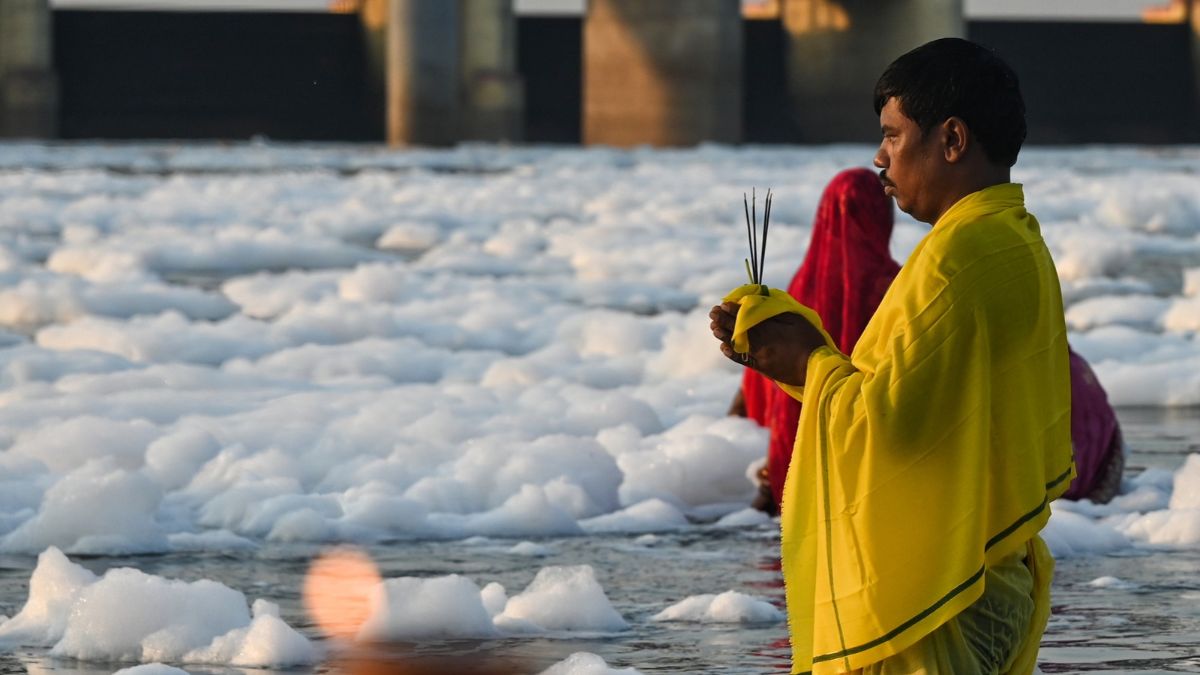
The Supreme Court has questioned authorities over the continued pollution of the Yamuna, noting that the river remains contaminated despite large sums being spent on its cleaning. In an order dated November 4, a two-judge bench of Justices Manoj Misra and Manmohan warned that states, union territories and authorities failing to stop pollution in the river would face penalties.
The bench said the poor health of the river and the 520 drains discharging wastewater into the Yamuna reflect what is wrong with civic administration in towns, cities and villages along its banks. It observed that industrial pollution and untreated sewage must be curtailed, if not stopped altogether, at the source, and that where this is not possible, sewage must first be tapped and then treated. It noted that tapping would remain a challenge without a robust sewage system and due to the joining of storm-water and sewage drains.
The court underlined that civic authorities would find it difficult, if not impossible, to tap sewage in most illegal and unauthorised colonies built on encroached land, since these are not built on a grid layout and have hardly any space for laying a sewage system. It said sewage from such colonies would remain a problem as they would continue to pollute the river at the source.
The court said Zone 'O', as defined in the Delhi Master Plan 2047, should not only be maintained and protected as a green zone but also extended upstream and downstream if feasible, from the source of the Yamuna to its confluence with the Ganga. It said no permanent structures, except green parks and essential public infrastructure projects, should be allowed in the said or extended zone in future, and that only semi-permanent structures such as cycling and walking tracks should be permitted for recreation and tourism. Existing structures should be removed in accordance with the law and after allocating alternative accommodation to occupants where they are entitled, it added.