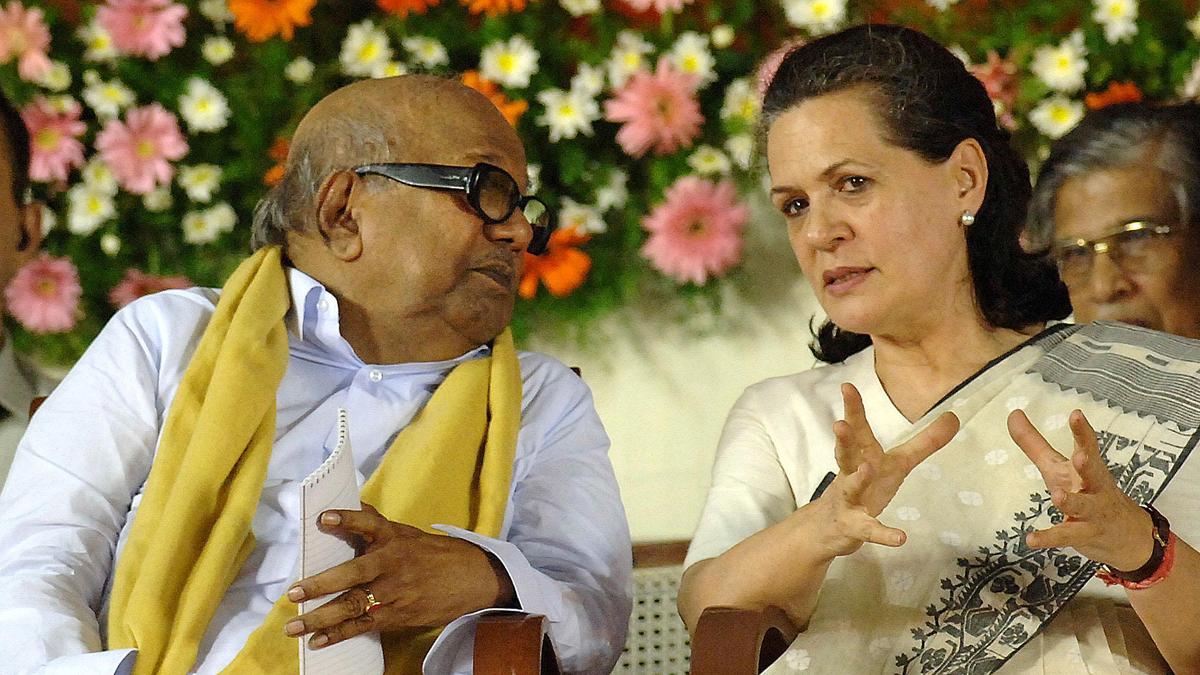
Congress leader Sonia Gandhi has recounted the difficult personal dilemma she faced before agreeing to ally with the DMK ahead of the 2004 parliamentary elections, describing it as her most challenging political assignment. In her memoir, Belonging: A Journey of Love, she writes that she was initially wary of the tie-up because the assassination of her husband and former Prime Minister Rajiv Gandhi by the LTTE weighed heavily on her mind.
The Congress and the DMK first came together in 1971 and again in 1980, and later joined hands as part of the nationwide United Progressive Alliance forged in 2004. According to the memoir, the alliance that year was born out of political necessity, with the DMK seen as the most important party in the south among the forces needed to challenge the BJP. She writes that she could sense some of her colleagues from Tamil Nadu were keen on an alliance but did not know how to raise the subject with her.
In the memoir, she notes that at the time of the 1991 election, DMK cadre had been vocal supporters of the LTTE, the terrorist group that killed Rajiv, and that some in the party had openly threatened him. She also recalls the Congress's decision to withdraw support to Prime Minister I.K. Gujral's government in November 1997 after the Jain Commission's interim report, which inquired into Rajiv Gandhi's assassination and criticised the DMK for its alleged support to the LTTE.
According to the memoir, she reconciled herself to the political necessity of joining hands with the DMK, whose leader M. Karunanidhi was said to be unhappy with the Vajpayee government, in order to defeat the BJP.