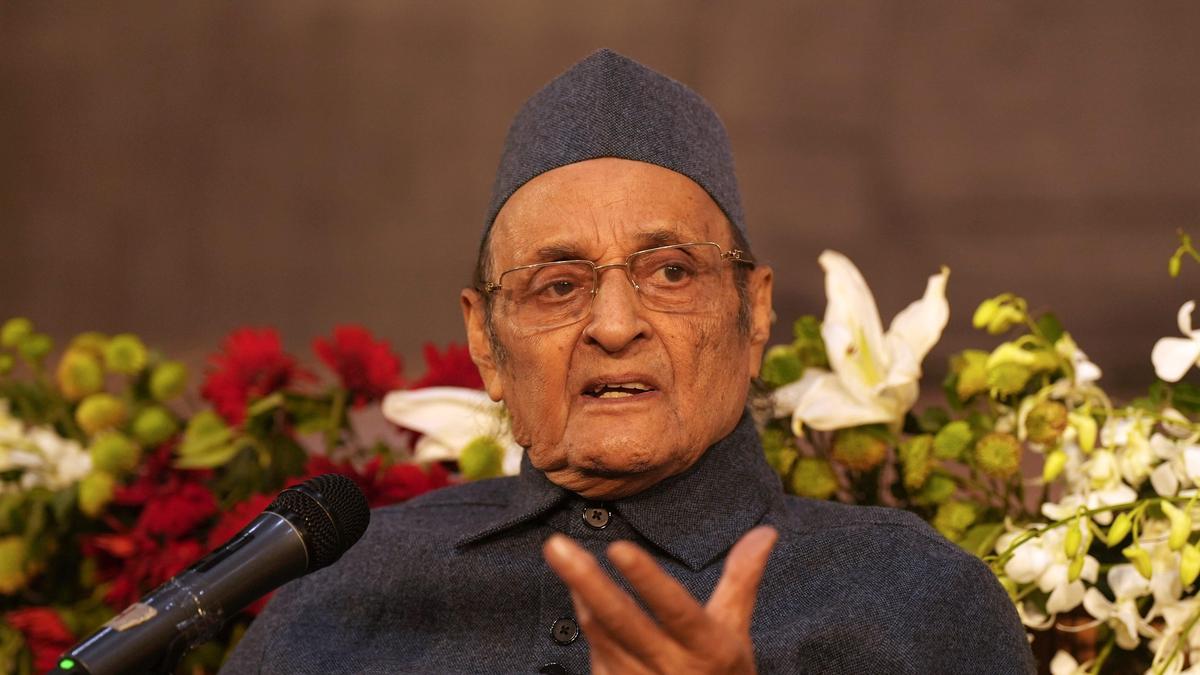
Senior Jammu and Kashmir politician Karan Singh on Thursday said he was shocked to learn that heavy earth-moving equipment is being used to widen the route to the Amarnath shrine, overlooking Sheshnag lake in Kashmir. In a statement, Mr. Singh, who also served as the last Dogra Maharaja of J&K, said he joined those protesting the move and urged the authorities not to use heavy equipment on the route. He cautioned that there was no need to turn every pilgrim route into a motorable road for the convenience of tourists, adding that genuine pilgrims would not mind walking or riding to the shrine. He said he had for years been raising the damage caused to the Himalayas by avoidable road widening on pilgrim routes, particularly in Uttarakhand, and saw no reason why tourists and pilgrims could not manage with two-lane roads.
His son Vikramaditya Singh, in a post on X, called it a collective duty to preserve the natural beauty and unique ecology of J&K for future generations, citing the felling and burning of protected Chinar and Chestnut trees in Kashmir along with the road construction near the sacred lake. He urged the J&K government and authorities to take serious cognisance and ensure strict monitoring before it is too late.
Meanwhile, Peoples Democratic Party president Mehbooba Mufti asked J&K Chief Minister Omar Abdullah to withdraw the Memorandum of Understanding with the Border Roads Organisation and explain the use of heavy machinery at the high-altitude glacial lake. Addressing a press conference in Srinagar, she expressed dissatisfaction over Forest Minister Altaf Kalooo's statement that all was well at the lake and there was no violation at the site, and demanded that the government halt the use of machines such as JCBs and make the MoU public. She also asked why an extension was granted to the BRO, and warned that tree felling, wider roads and the transport of heavy machinery could aggravate environmental concerns in the seismic zone, describing Sheshnag as an important part of Kashmir's religious, cultural and historical identity.