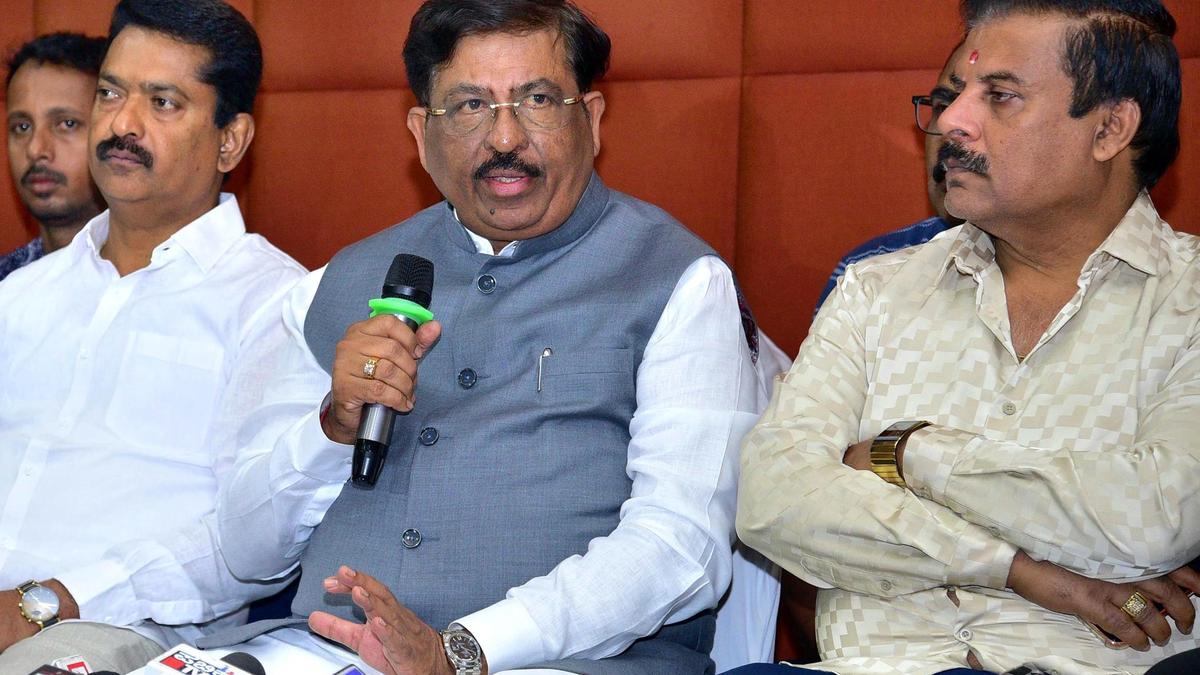
Former Minister and BJP leader Murugesh Nirani has challenged Food and Civil Supplies Minister Rizwan Arshad to conduct fresh, transparent tests on ethanol blending in petrol, disputing the Minister's claim that fuel outlets in the State supply petrol with excess ethanol. Speaking at a press conference in Mysuru on Wednesday, Mr. Nirani said proper sample collection should involve senior government officials, including the Deputy Commissioner, laboratory scientists, Food and Civil Supplies Department officials and representatives of oil marketing companies.
Mr. Arshad had accused oil marketing companies of supplying petrol with ethanol content exceeding the prescribed limit of 20% in most samples collected during a surprise inspection. Samples tested by independent NABL-accredited laboratories had reportedly shown a higher proportion of ethanol, according to the Minister. Mr. Nirani urged him to form a committee of designated officials and oil company representatives to carry out fresh surprise inspections, saying action could be taken against the companies if any variation is found.
Mr. Nirani described the Minister's allegations against the Centre as "politically motivated" and aimed at diverting public attention from rising prices of essential commodities in the State. He ruled out the possibility of excess blending at the fuel outlet level and admitted that petrol blended with 20% ethanol could reduce vehicle mileage by 4% to 5%, while saying the impact on engines was negligible.
Mr. Nirani, who also runs a chain of sugar factories, clarified that ethanol blending was not introduced by the BJP government, noting the technology is more than 100 years old and has been used for decades in countries including Brazil and Thailand. Pointing out that ethanol is marginally cheaper than imported crude oil, he said the Centre had contained petrol prices at present levels through blending, adding that without it petrol would cost more than ₹125 a litre. More than 500 units produce ethanol from sugarcane, molasses, rice and maize, with a combined annual capacity estimated at around 1,600 crore litres.