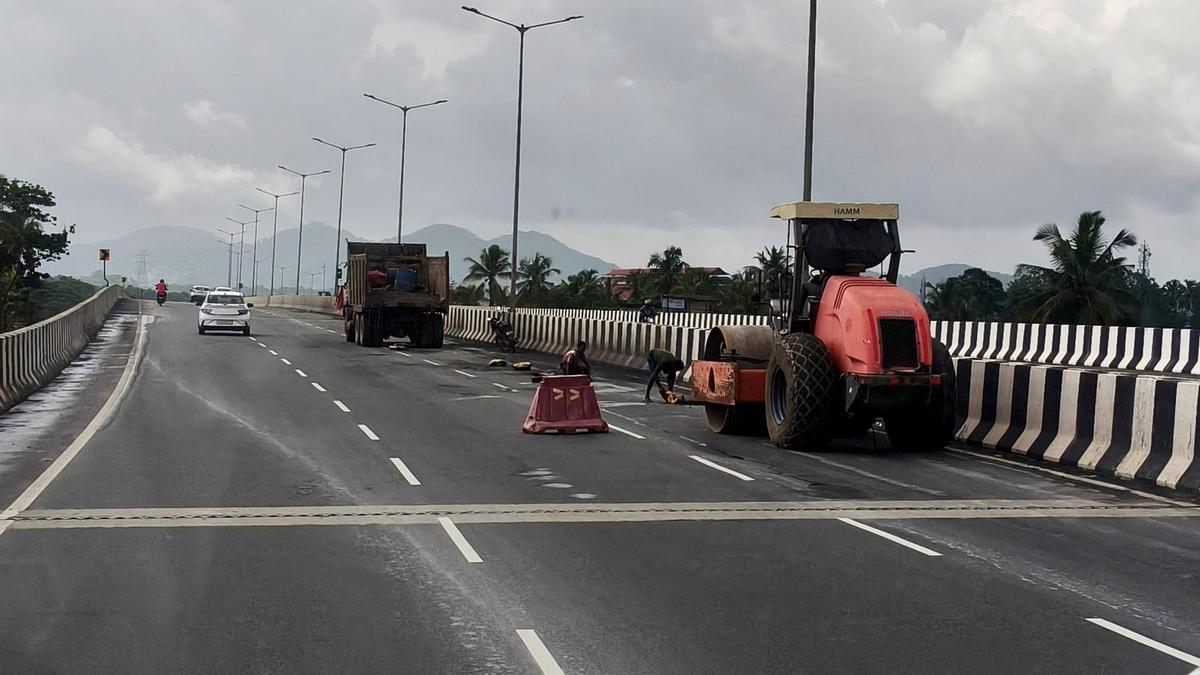
The National Highways Authority of India (NHAI) is deploying an artificial intelligence-powered analytical tool to assess road conditions, identify damage to roads and pavements, communicate the information to contractors, follow up on complaints and ensure issues are rectified.
According to NHAI officials, Dashcam Analytics systems have been mounted in patrol vehicles to monitor highways for infrastructure-related issues. The system captures geotagged, high-resolution photographs of road conditions, pavements and road signage, and uploads them to a dashboard, with each photograph uniquely numbered. The information is then communicated to the relevant contractor, who proceeds to rectify the issue. Officials described it as an end-to-end "detection to rectification" system. The details were shared during technical sessions at the 85th Indian Roads Congress in Hyderabad.
Key road conditions identified by the system include potholes and road rutting, which refers to the formation of depressed surfaces on the road. Other issues identified include edge dropping and uneven road shoulders, streetlights that are not working, signage, and gaps in road medians.
The IRC also deliberated on whether India could take a lead in road safety globally. Samrat Valani, vice-president of Development, Operations and Customer Experience, North America, Transurban, made a case for a clear mandate to halve road deaths by 2030, in line with the Stockholm Declaration on road safety adopted in 2020. He emphasised the need for a strong framework based on the "four Es" — education, engineering, enforcement and emergency care — along with political will and evidence that initiatives were working. Citing data, he said 54,000 people who did not wear helmets lost their lives in India last year.