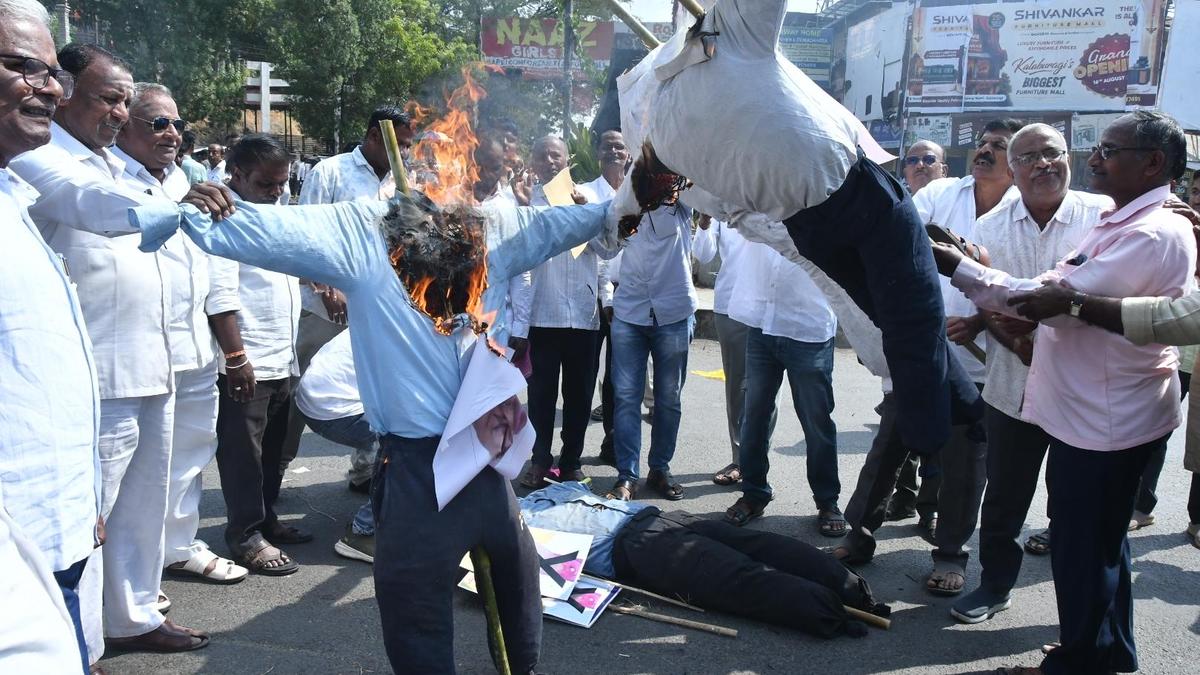
The Karnataka Cabinet's decision to forfeit copies of Basava Mantapa, a book by NRI author Ravi Hanj, over alleged derogatory remarks against the 12th-century social reformer Basavanna, has revived the debate over whether banning or forfeiting books is the right approach. Several writers, while opposing the book's contents, maintain that no book should be banned, while some, including police officers, argue that the line between freedom of expression and hate speech is blurred, particularly when public order is threatened.
This is not the first such instance in Karnataka. Including Basava Mantapa, at least six books have been banned or forfeited in the State post-Independence, mostly over hurt religious sentiments, and courts have upheld such decisions, as in the case of Dharmakarana by P.V. Narayana in 1997. In the case of Dhundhi (2013), a court ruling led to an effective ban.
Banjagere Jayaprakash, whose book Aanudeva Horaganavanu was banned in 2007, said the answer to any book should be another book, though he added that intent, language and academic rigour matter. Yogesh Master, whose novel Dhundhi was banned, said banning a book deprives the academic world of a chance to read and debate it, and that the statements of Mr. Hanj amounted to a cultural insult to Kannada.
Arvind Narrain, president of the People's Union of Civil Liberties, Karnataka, said the Constitution provides for a ban or forfeiture on three grounds: national security, threat to public order and threat to public morality. He questioned whether the protests amount to a threat to public order that the government cannot handle, calling a ban the language of an oppressive State. Senior writer K. Marulasiddappa said that while banning a book was unacceptable in principle, disturbance to public order was a valid ground, and the line blurs when writing borders on hate speech.