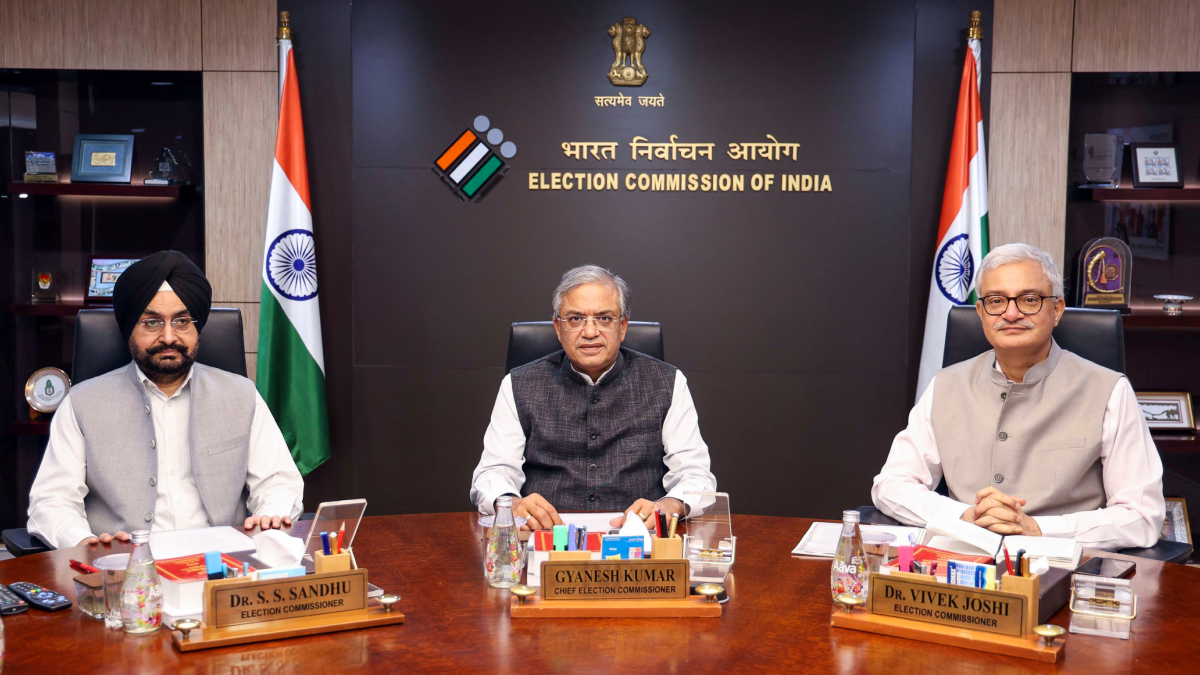
Rahul Gandhi and other INDIA bloc leaders have filed an affidavit in the Supreme Court in connection with the petition challenging the Special Intensive Revision (SIR) of electoral rolls and Chief Election Commissioner Gyanesh Kumar. The affidavit was submitted a day ahead of the scheduled hearing.
According to the original report, the opposition leaders have sought permission to personally question CEC Gyanesh Kumar, both Election Commissioners and the Director General of IT within the poll body. They have also prepared a list of 48 questions for the Election Commission of India (ECI). The INDIA bloc has alleged that the ECI's affidavit failed to address key questions about allegations of "vote theft" and the revision of electoral rolls.
The Supreme Court is hearing petitions challenging the actions of CEC Gyanesh Kumar and the ECI over the nationwide SIR of electoral rolls. The petitioners, including Congress leader Rahul Gandhi and advocate Vikas Singh, have alleged that CEC Gyanesh Kumar took unilateral decisions during the SIR exercise without the consent or concurrence of the other two Election Commissioners, Sukhbir Singh Sandhu and Vivek Joshi. They have also raised concerns over changes made to Form 6.
Last month, a bench headed by Chief Justice of India Surya Kant refused to grant interim relief seeking Kumar's suspension, observing that the court could not pass an ex-parte order or remove the head of the poll panel based solely on media reports without examining official records. The Supreme Court subsequently issued notices to the ECI, CEC Gyanesh Kumar, the other Election Commissioners and the Centre, seeking their responses. In response, the ECI and the three Election Commissioners filed a joint counter-affidavit spanning nearly 250 pages, maintaining that all major decisions during the SIR process were taken unanimously. They argued that any attempt to restrain the CEC from discharging his duties would be contrary to law, asserting that the CEC can be removed only through the same constitutional procedure and on the same grounds applicable to a Supreme Court judge.