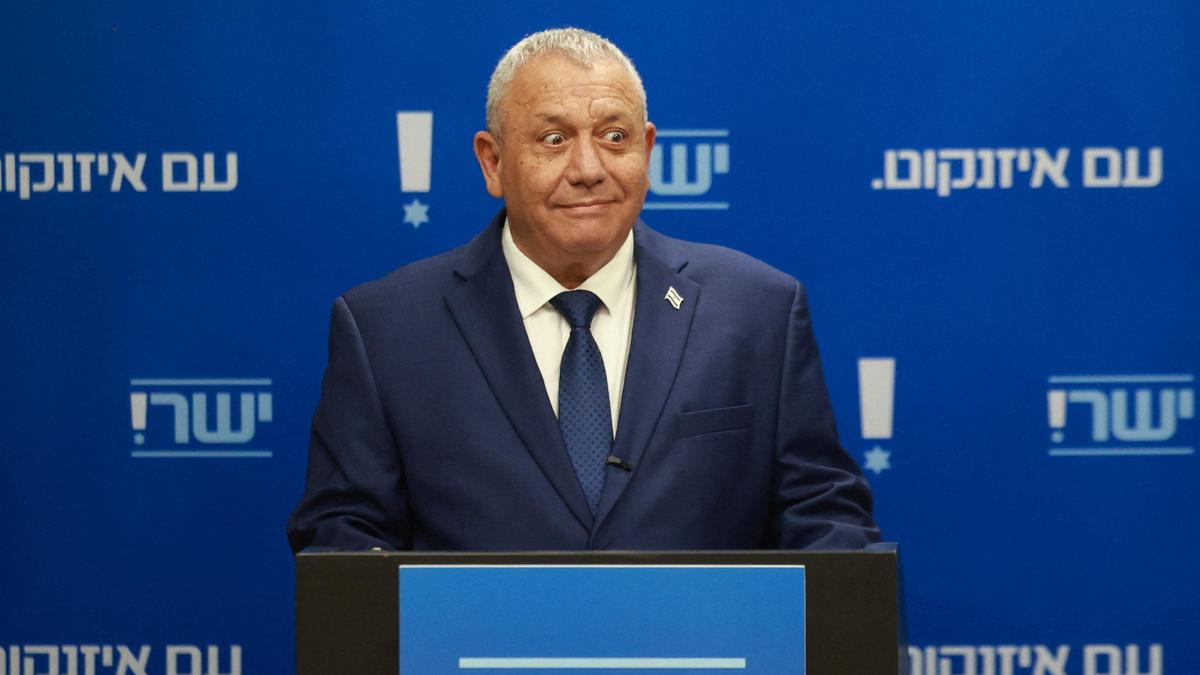
Gadi Eisenkot's centrist Yashar party and the left-leaning Democrats announced on Thursday, November 26, 2026, that they have agreed on a coalition deal, according to a joint statement. The Democrats are the second party to sign such an agreement with Yashar, after the right-wing Israel Beiteinu party did so on Tuesday. Under the deal, the Democrats said they would receive four ministerial portfolios, including an expanded national security ministry, as well as the labour, communications, and culture and sport ministries, the latter to include a new directorate for democracy.
Eisenkot, who is trying to form the next Israeli government, has until December 6—a deadline extendable by 14 days—to put together a government to replace caretaker Prime Minister Benjamin Netanyahu, after the October election failed to deliver a clear majority for either bloc. Eisenkot, Israel Beiteinu chief Avigdor Lieberman and Democrats chair Yair Golan have a combined 36 lawmakers, far short of the 61 needed for a parliamentary majority. The bloc also includes former Prime Minister Naftali Bennett's Beyachad party, which holds 12 seats but is yet to sign a formal coalition agreement with Yashar.
Eisenkot's anti-Netanyahu camp has faced divisions over whether to ally with the ultra-Orthodox parties, the Arab-majority lists, or form a national unity government with Netanyahu's Likud. The Democrats have pushed for an alliance with two Arab-majority lists, and disapproved of four rounds of talks between Yashar and Likud on a possible unity government, with no breakthroughs ostensibly reached. Lieberman has refused to serve in a government relying on Arab-majority parties and has instead advocated an alliance with the two ultra-Orthodox parties.
On Thursday, Lieberman warned that Netanyahu was trying to derail the government's formation, saying he would drag out negotiations over a "unity" government until the last moment and look for a pretext to blow them up. Bennett, meanwhile, has pushed for a unity government between Eisenkot's bloc and Likud that would exclude the ultra-Orthodox and Arab parties, writing on X that the best alternative is a Zionist unity government led by Eisenkot first.