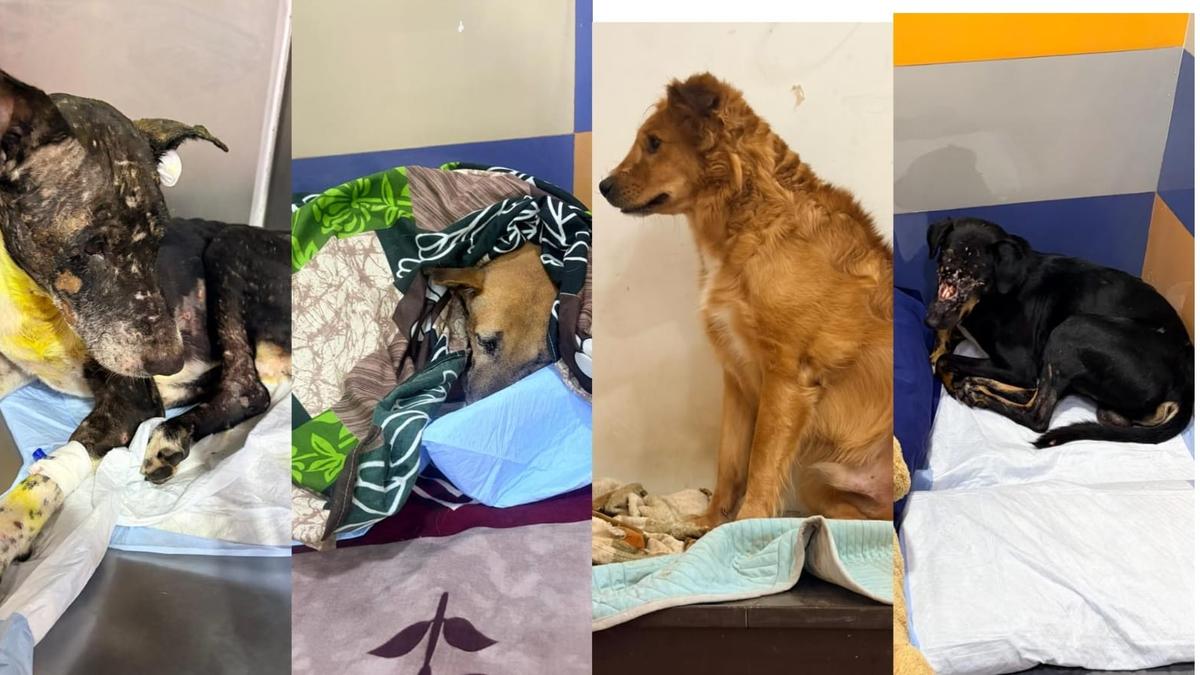
Several dogs in Delhi-NCR have survived brutal attacks, including acid burns and pellet shootings, but activists say most cases never reach an FIR. Veer, a golden-furred dog rescued from Ashok Nagar in August 2025, underwent a rare six-hour facial reconstruction surgery costing around ₹4 lakh after an acid attack left his face severely damaged; veterinarians had initially recommended euthanasia. He has regained much of his ability to see, eat and move, though some limitations remain, and now lives with rescuer Priya Chopra in south Delhi. His case could not be registered as an FIR, with the absence of CCTV footage cited among the reasons, according to animal activists.
In September 2026, a 10-year-old street dog later named Rudra was reportedly thrown with boiling water in Shahdara, allegedly because it sat on a resident's staircase; he was hospitalised for nearly a month with severe burns and septicaemia. Shaurya, a two-year-old from Meerut's Khirwa Jalalpur village, was shot at close range on June 13, 2026, with scans revealing more than 200 lead pellets in his skull, muzzle, eye and jaw. About 150 pellets were removed surgically, but he has permanently lost his vision. An FIR was registered at Sardhana police station on June 15 under the Prevention of Cruelty to Animals Act and the Bharatiya Nyaya Sanhita, though the chargesheet is yet to be filed.
Neemo, around five years old, was rescued after a juvenile allegedly smashed his face with a brick on a foot overbridge near IIT Delhi. According to Ms. Chopra, the juvenile had allegedly attacked animals before, including a cow. No case was registered after a disability certificate indicating mental disability was produced, and activists are now seeking counselling for him.
The National Crime Records Bureau included offences under the Prevention of Cruelty to Animals Act in its Crime in India 2024 report for the first time, recording 9,039 cases nationally, of which Delhi accounted for 35. Activists say such figures capture only reported cases, and that police are often reluctant to register complaints, leaving the true scale of cruelty unclear.