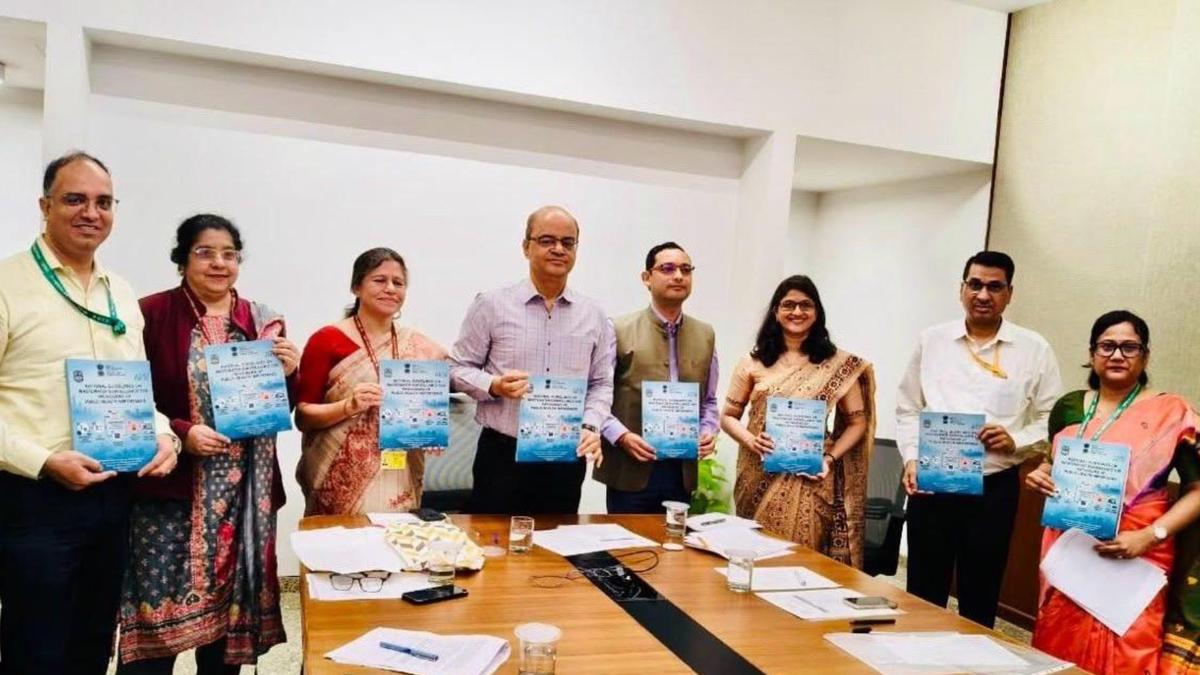
CSIR-Centre for Cellular and Molecular Biology (CSIR-CCMB), Hyderabad, has played a key role in shaping the Centre's newly released national guidelines for monitoring disease-causing bacteria and viruses through wastewater. The guidelines, titled 'Wastewater Surveillance for Pathogens of Public Health Importance', aim to help public health authorities detect and monitor a wide range of pathogens, including influenza viruses, monkeypox, hepatitis A and E viruses, rotavirus, adenovirus, respiratory syncytial virus (RSV), and bacteria such as Vibrio cholerae and Salmonella typhi.
Wastewater surveillance involves testing sewage samples collected from treatment plants and drains for pathogens circulating within communities. According to scientists, the approach offers a cost-effective means of assessing disease burden, identifying outbreaks early and complementing traditional clinical surveillance systems. It can also help detect emerging pathogens that may pose future pandemic threats. The technique's value was demonstrated during the COVID-19 pandemic, when wastewater monitoring was used globally to track circulating SARS-CoV-2 variants and provide early warning of disease spread.
CSIR-CCMB brought together leading research and clinical institutions in 2021 under the Alliance for Pathogen Surveillance and Innovations (APSI) India consortium, which includes the National Centre for Biological Sciences, Tata Institute for Genetics and Society, CSIR-National Chemical Laboratory, IISER Pune, Ashoka University, CSIR-Institute of Genomics and Integrative Biology, and the Pasteur Institute, Shillong. Working closely with the National Centre for Disease Control (NCDC) under the Ministry of Health and Family Welfare (MoHFW), APSI developed protocols for detecting pathogens such as SARS-CoV-2, influenza viruses and bacteria associated with antimicrobial resistance through wastewater analysis, and prepared a roadmap for integrating wastewater surveillance into India's existing disease-monitoring systems.
"We hope that expanding wastewater environmental surveillance programmes to these pathogens will help in their effective management, as seen during COVID-19," said CSIR-CCMB director Vinay K. Nandicoori. The guidelines were released in New Delhi on November 16 by MoHFW additional secretary (Public Health) Rakesh Gupta. The initiative will also support the goals of the 'National One Health Mission' by helping build a more resilient and responsive public health system.