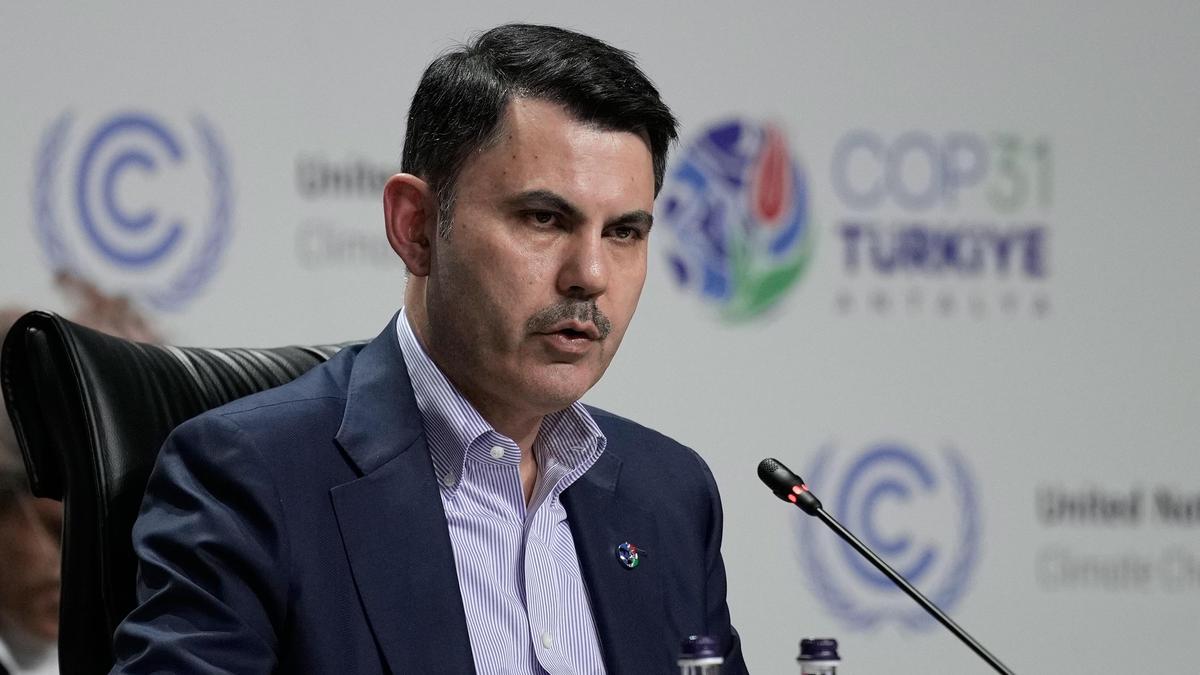
The latest proposed agreement at the UN climate talks in Antalya, Turkiye, does not mention fossil fuels — the main cause of global warming — or call specifically for moving away from coal, oil and gas. The draft, released in the early hours of Sunday (November 22, 2026) by Turkish Environment Minister Murat Kurum, who presides over COP31, gives negotiators only about three hours to raise objections or seek changes before it goes to the conference plenary. Approval requires near-unanimous consensus, and several countries had earlier objected strongly to leaving out a call to phase out fossil fuels.
The two-week summit, which was scheduled to end on Friday (November 20, 2026), is now in double overtime. Organisers worry that a voting quorum of two-thirds of delegates may not be met as negotiators leave, which would prevent passage of the draft.
The 10-page text refers in its first line to the United Arab Emirates Consensus but does not contain the words "fossil", "oil", "coal" or "phase out" anywhere. It does set a goal for carbon capture and storage, a technology supported by the oil industry. It also calls for raising the share of electricity in total final energy consumption to 35% from about 21% now by 2035, Turkiye's signature effort. Climate activists have sought a provision that such electricity come only from renewables, with climate scientist Bill Hare of Climate Analytics saying electrification running on coal and gas does not limit warming. Turkiye and the head of the International Energy Agency said that with 80% of new electricity fuelled by renewables, the goal will cut emissions just the same.
Earlier in the week, Panama vowed to formally object to any final agreement that did not cap oil production, acknowledge failing goals to limit warming and increase finance for adaptation. Its environment minister, Juan Carlos Navarro, said the talks were being held hostage by a "petroleum mafia" and need reform. Analyst Alden Meyer of the European think-tank E3G noted that fossil fuels went unmentioned in final decisions for more than 25 years, mostly due to objections by Saudi Arabia, though the world agreed in Dubai in 2023 to transition away from fossil fuels. He said it would be a real setback to leave without signalling seriousness about that commitment. Many developing countries also sought details, including an explicit baseline, on pledges to triple financial aid for adaptation, but did not get them.