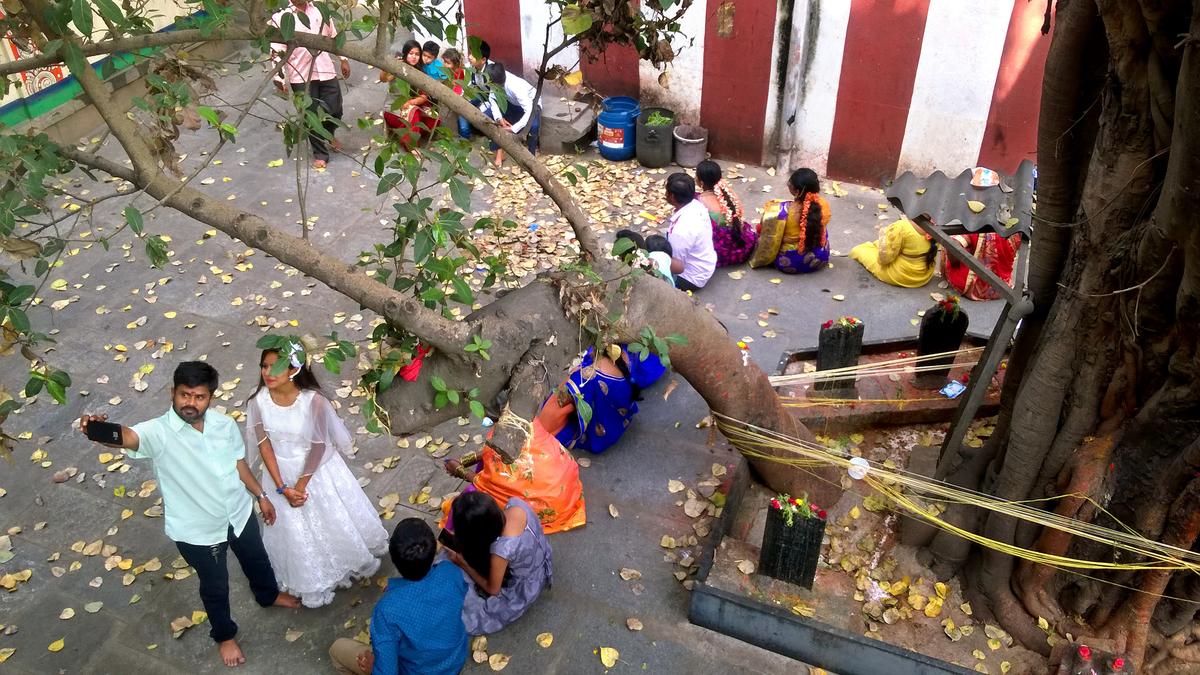
A new book, The City Beneath the Tree: How Design and Social Interactions Shape Small Public Spaces in Bengaluru, published by Permanent Black, examines the city's ashwath kattes, the traditional platforms built around peepal trees. It is co-authored by Bengaluru-based architect and urban designer Kiran Keswani and Suresh Bhagavatula, Professor of Entrepreneurship at IIM Bangalore.
Keswani first came across the term at a volunteer meeting for the Bangalore Tree Festival around 2015, and the authors soon noticed such kattes across the city. They found that the spaces serve not only as places of worship but also as active social spaces used by the elderly, office-goers and mothers with young children. Bhagavatula observed that interactions at the kattes build connections leading to trust and reciprocity.
With support from the Azim Premji University External Research Grant under the theme 'Urban Sustainability and Governance' for 2018-19, the authors mapped around 100 kattes in Bengaluru using citizen science and selected 20 for in-depth study. The research assessed parameters such as spatial organisation, accessibility and walkability, and used a "name-generator" technique to understand social networks at these spaces.
The authors say the kattes reflect how Bengaluru has expanded, with the urban centre absorbing villages at its peripheries. Some kattes, including the one at Mavalli, host the ooru habba, a traditional village festival whose processional path still traces the old village boundary, according to Keswani. The study also found that many kattes are located near Mariamman temples, and the authors describe these spaces as a form of urban commons where religious, social and economic practices allow people to co-manage them.